
NFC business cards for sales teams
Capture the lead before the rep leaves the room.
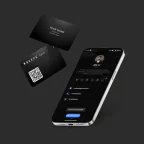
Cards ₹1,699 each · 2-5 profiles from ₹399/yr · 20 for ₹5,000/yr
Your logo printed free · usually arrives in 7-10 days
Read our Google reviewsA digital business card for a sales team puts each rep's catalogue, enquiry form and WhatsApp on a prospect's phone while the conversation is still going. One Pro account covers up to 5 reps for ₹699 a year, Enterprise covers 20 for ₹5,000, and each NFC card is ₹1,699 once.
The lead is lost in the gap between the meeting and the CRM
A rep spends a day at an exhibition and comes back with a stack of cards and a memory of which ones mattered. That stack becomes a spreadsheet on Thursday if it becomes anything, and by then the context - what the prospect asked, what they needed, when they said to call - has mostly evaporated. The conversation was the asset, and almost none of it survived the journey home.
The second thing missing is measurement. When the year's exhibition budget comes up for renewal, the honest answer to "did that event work?" is usually a guess assembled from whoever remembers what. Paper leaves no trace, so there is nothing to count except cards taken, which measures footfall rather than interest.
Three things that change on the road
What a rep's profile should carry
An enquiry form that qualifies
Requirement, volume, timeline and city. A rep who gets that before the follow-up call starts the conversation two steps further along.
WhatsApp, first and obvious
Most Indian B2B follow-up happens there. A one-tap button beats a printed number the prospect has to copy across manually.
The product catalogue
Specifications and prices the prospect can browse after the meeting, when they are explaining your product to whoever actually signs off.
A brochure or spec sheet
Attached as a PDF, so every rep sends the current version instead of one saved to a laptop two revisions ago.
A meeting link
The next step, available while interest is highest. A prospect who books on the spot does not need chasing for a fortnight.
The rep's own face and territory
Field sales is personal. A photo and a named region make the follow-up message land as someone they met, not an unknown number.
Four places a rep uses it in a week
Exhibitions and trade fairs
Three days, several hundred conversations, and a tote bag that gets emptied into a bin on the way home. A tap moves the exchange onto the prospect's phone, where it survives the journey.
Site and factory visits
The buyer is standing on a shop floor with dirty hands and no interest in paperwork. One tap and the catalogue and spec sheet are on their phone for later.
Cold walk-ins on a territory round
The receptionist takes your card for a manager who is out. A profile with a catalogue and an enquiry form gives that manager something to act on when they return.
The Monday pipeline review
Instead of asking reps how the week went, you can see which profiles were opened, how often and by how many people - and ask better questions.
Where field leads leak, in order of how much they cost
Every one of these happens after a conversation that went well.
The lead waits for someone to type it up
A rep comes back from an exhibition with a stack of cards and a memory of which ones mattered. By Thursday the context has evaporated and the stack is just names.
Let the prospect enter themselves
An enquiry form on the profile means the lead exists, with their own words attached, before the rep has left the hall.
No way to tell which event worked
When the exhibition budget comes up, the honest answer to "did that one pay for itself" is a guess assembled from whoever remembers what. Cards taken measures footfall, not interest.
One profile per rep, with analytics
Opens and clicks per rep per week. You can compare two events on evidence and stop paying for the one that never produced anything.
A rep leaves and the route dies with them
Every prospect who saved that card now has a number belonging to someone at a competitor. The relationship was the company's; the contact route was not.
Keep the link with the territory
Give each card a role-based username - the territory, not the rep. When a rep leaves, the new one takes over the same link with their own details, and the handover keeps the prospects.
Rolling this out across reps
Get these right before an event rather than during one.
- Give every rep their own profile. A shared team profile saves a little money and destroys the only useful thing the analytics tell you.
- Load the catalogue and specification PDF before the event. A buyer who taps on day one will not come back on day three.
- Write an enquiry form that qualifies: requirement, volume, timeline, city. A rep who has that before the follow-up call starts two steps ahead.
- Put the QR on the stand backdrop as well as the cards. In a crowded hall, plenty of people never get close enough to tap.
- Agree what happens to a profile when someone leaves, before someone leaves.
What a rep can do with each, at the moment of contact
| Capability | Printed card | Beeps Card |
|---|---|---|
| Hands over name and number | Printed card✓ | Beeps Card✓ |
| Prospect can enquire immediately | Printed card✕ | Beeps Card✓ |
| Catalogue and spec sheet attached | Printed card✕ | Beeps Card✓ |
| Book the next meeting on the spot | Printed card✕ | Beeps Card✓ |
| Cannot run out mid-trip | Printed card✕ | Beeps Card✓ |
| Shows visits per rep | Printed card✕ | Beeps Card✓ Pro |
| Link passes to the next rep | Printed card✕ | Beeps Card✓ |
| Update pricing across the team at once | Printed card✕ | Beeps Card✓ |
Cheaper than one wasted exhibition stand
Analytics are the part sales teams buy this for, and they sit on Pro. Below 20 reps, individual Pro profiles are usually the simpler purchase.
More for sales teams
Standardising cards across a whole company rather than a sales floor? See Beeps for corporate teams. Selling drugs to doctors? Read the medical representative page first, because that trade has its own code. Or browse every profession we have written for.
What sales heads ask first
How does this capture a lead that a paper card does not?
A paper card only works if the other person keeps it and acts later, which mostly does not happen. When a rep taps a Beeps card the prospect is on a page with an enquiry form, a WhatsApp button and a save-to-contacts action, so the exchange can become a captured enquiry in the same thirty seconds rather than a card in a shirt pocket that goes through the wash on Sunday.
Can we tell which expo or which rep produced results?
Yes, on Pro at ₹299/year per profile, which reports views and clicks per profile. A rep working a three-day exhibition can see how many people opened their profile and how many went on to message or enquire, which is a far better read on whether the stand was worth the money than counting how many cards were taken from the bowl.
What if a rep runs out of cards mid-trip?
They cannot. The card is one way into the profile, not the profile itself - the same page is reachable from a QR code on their phone screen and from a link they can send on WhatsApp. A rep on the fourth day of a trip has exactly as much capacity to share their details as on the first.
A rep resigned. What happens to their pipeline?
The link stays with your company. Give rep cards role-based usernames - your company and territory, not the rep's name - and the new rep takes over the same link with their own details and a card printed with their name. The prospects who saved that card reach the new rep, instead of you starting over from a spreadsheet of half-remembered names.
Do prospects need to install anything?
No - and this matters more for field sales than anywhere else, because the moment you ask a prospect to install an app to receive a business card, the exchange is over. Tapping opens the profile in whatever browser their phone already uses. Every card also carries a printed QR for phones without NFC.
How is a team of reps priced?
Enterprise covers 20 profiles under one subscription at ₹5,000/year, billed to the company. Below that size, individual Pro profiles at ₹299/year each give you the same per-rep analytics. Cards are ₹1,699 one-time per rep and are optional - the link and QR work without them.
Stop counting cards taken.
Start counting profiles opened.
Enquiry form, catalogue and WhatsApp behind every rep's tap. Pro from ₹299/year per rep, cards optional at ₹1,699.
Questions first? Ask us on WhatsApp - 24/7, usually an instant reply.