
Digital business cards for event managers
You hand out more cards than anyone.
You work at the exact places where cards get exchanged, and in one week you meet clients, venues, caterers, decorators and AV crews. Each wants something different from the same card, and by the third hour of an event you have none left. A profile carries past events for the client and vendor detail for the supplier, and it cannot run out.
Card ₹1,699 once · profile from ₹199/year
Your logo printed free · usually arrives in 7-10 days
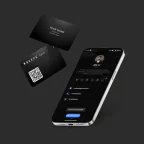
Read our Google reviewsA digital business card for an event manager is one profile for everyone you meet at an event: past events and packages for clients, contact and booking details for venues and vendors. It opens with a tap or a QR scan, cannot run out halfway through a show, and updates without reprinting. The NFC card is ₹1,699 once, and the profile from ₹199 a year.
You are not selling to an audience. You are the middle of a network.
Most professions hand a card to one kind of person. You hand it to a bride, a banquet manager, a caterer, a decorator, an AV supplier and a corporate admin, often in the same week and sometimes at the same event. Those people want almost nothing in common from you. The client wants to see what you have run and whether you are free; the supplier wants to know what you book, at what scale and how you pay.
The second thing that makes this profession unusual is volume. You spend your working life in exactly the settings where cards are exchanged, which means you burn through them faster than anyone and are most likely to be standing in the third hour of an event with none left and both hands full. That is not a small inconvenience - it happens at precisely the moment someone is impressed enough to ask.
Three things that change on an event day
Six things an event manager's profile should carry
Past events by type and scale
Guest count, city, month and a photograph. Far more useful to a prospective client than a list of names they will not recognise, and it names no one who did not agree to appear.
What you actually take on
Weddings, corporate offsites, product launches, conferences. And the scale you work at, because a planner who does 80-guest events and one who does 2,000 are different businesses.
Availability, or a way to ask
Your product is a date. Anything that lets a client test a date without waiting for you to reply removes the most repeated exchange in your working week.
The vendor categories you book
Caterers, decor, AV, photography, transport. This is the half of the page that talks to suppliers, and it is why they will save your details rather than take a card.
How you charge
Percentage, flat fee or per head - the shape, not necessarily the number. Clients and vendors both need to know how you work before a serious conversation starts.
A gallery that loads on venue wifi
Keep it tight. You will be showing this in a banquet hall basement with two bars of signal, which is not where a forty-image gallery performs well.
Four moments in an event week
On site, mid-event
A guest at a wedding you are running asks who organised it. You have no free hands and no cards left in the third hour. One tap on their phone and you are back to work.
Venue and vendor meetings
A banquet manager or a caterer meeting you wants to know the categories you book and the scale you work at. That is the half of your page they will actually read.
Wedding expos and bridal fairs
A weekend of a few hundred conversations and a tote bag that gets emptied on Monday. What reached the couple's phone at your stall is what still exists when they start shortlisting.
The referral six months later
A guest is planning their own event and asks the couple who ran theirs. A forwarded link carries your past events and your date availability; a remembered name carries neither.
Three habits that cost planners work
The first is about bandwidth, the second about consent, and the third about who is actually reading.
A gallery of forty images
You are proud of the work and it is the wrong instinct here. Venue wifi is poor, the client is scrolling on mobile between other appointments, and the fortieth photograph of a mandap is doing nothing the fourth did not.
Eight images, spread across event types
Enough to prove range and scale, few enough to load in a basement. A client deciding whether you can run their event needs breadth, not volume.
Naming clients who never agreed
Listing the families and companies whose events you ran feels like proof, and a good number of them would be unhappy to find their wedding or their offsite used as your marketing without being asked.
Describe the event, not the client
"300-guest wedding, Kochi, December" says more about your capability than a surname does, and it puts nobody in the position of discovering they are a case study.
Only speaking to clients
Half the people you hand a card to are vendors - venues, caterers, decorators, AV. A page written entirely for a bride gives a banquet manager no reason to keep you, and your vendor network is most of your actual leverage.
Give suppliers their own section
Categories you book, typical scale, how you pay. It sits below the client-facing part, and it is why a good caterer calls you first when a date frees up.
Setting up an event manager's profile
Written for a page that will mostly be opened in a banquet hall on poor signal.
- Pick eight photographs across different event types and scales, and stop. This is the single decision that most affects whether the page works in a venue with bad signal.
- Describe each past event by type, guest count, city and month. Never by client name unless they have explicitly agreed in writing.
- Add an availability or booking link before anything else - it removes the question that opens almost every enquiry you get.
- Write a short vendor-facing section: what you book, at what scale, and your payment terms. Half your audience is suppliers.
- Turn on UPI if you take a booking advance. A date is not held until money moves, and in this trade that gap loses work.
What runs out, and what does not
| Capability | Printed card | Beeps Card |
|---|---|---|
| Your name and company | Printed card✓ | Beeps Card✓ |
| Past events with scale and photographs | Printed card✕ | Beeps Card✓ |
| Client checks a date themselves | Printed card✕ | Beeps Card✓ |
| Vendor-facing detail alongside client-facing | Printed card✕ | Beeps Card✓ |
| Cannot run out mid-event | Printed card✕ | Beeps Card✓ |
| Takes the booking advance | Printed card✕ | Beeps Card✓ Pro |
| Add last weekend's event without reprinting | Printed card✕ | Beeps Card✓ |
| Survives being forwarded by a past client | Printed card✕ | Beeps Card✓ |
What a planner actually pays
Compare it against what you currently spend reprinting cards you run out of. For most planners that is the honest comparison rather than the sticker price.
More for event managers
Shooting the events rather than running them? See Beeps for photographers. Feeding the guests? See Beeps for caterers. Or browse every profession we have written for.
What planners ask first
I hand out more cards than anyone I know. Does that change the maths?
It is the strongest argument for this in your profession. You work at the exact venues where cards get exchanged, and you are meeting clients, venues, caterers, decorators and AV crews in the same week. At that volume a printed card is a consumable you keep reordering, and running out mid-event is a real cost. A profile cannot run out, and the card is a one-time ₹1,699 rather than a recurring print bill.
The same card goes to clients and to vendors. Can one page serve both?
Yes, and the ordering is the trick. Put past events and the enquiry route at the top for clients, who are the more frequent visitor and the one deciding whether to hire you. Vendor-facing detail - the categories you book, your usual scale, your payment terms - sits below, where a caterer or a decorator will find it without a bride having to scroll past it.
What should I show from past events?
Type, scale and a photograph, rather than a client list. "300-guest wedding, Kochi, December" tells a prospective client more about whether you can handle their event than a name they do not recognise. It also avoids naming clients who never agreed to appear in your marketing, which matters more than most people in this trade assume.
Can clients check whether I am free on their date?
Yes - a booking or availability link sits on the profile, which removes the single most repeated question in your inbox. For an event manager this is worth more than for most professions, because your entire product is a date, and every enquiry starts by testing whether that date is available.
Can I take the booking advance through it?
On Pro at ₹299/year, which adds UPI collection. A date is not really held until money has moved, and in this business the gap between a verbal yes and a transfer is where dates get lost to a faster-replying planner. Collecting on the spot closes that gap while the client is still in the conversation.
Should my whole team have one?
Anyone who is on site meeting people should, which for an event company is most of the operations staff rather than a select few. Below about 17 people, individual Pro profiles at ₹299/year each cost less. Past that, Enterprise covers 20 profiles at ₹5,000/year on one invoice.
Hour three, both hands full,
and no cards left.
One tap works on day four exactly as it did on day one. Profile from ₹199/year, card ₹1,699 once.
Questions first? Ask us on WhatsApp - 24/7, usually an instant reply.