
Digital business cards for marketing professionals
Your own presentation is the portfolio.
You are the only profession whose card is itself a work sample. A doctor with a plain card is a doctor with a plain card. A marketer who has just explained that presentation and measurement decide outcomes, and then hands over an unmeasurable paper rectangle, has quietly contradicted the pitch. A profile carrying your case studies with real numbers does the opposite.
Card ₹1,699 once · profile from ₹199/year
Your logo printed free · usually arrives in 7-10 days
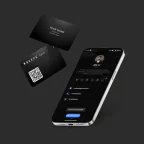
Read our Google reviewsFor a marketer, the card is a work sample. A Beeps profile carries your case studies, services and contact details, opens with a tap or a QR scan, and on Pro shows how many people opened it each week: the measurement a paper card cannot give. The NFC card is ₹1,699 once, and Pro is ₹299 a year.
Everyone else hands over a card. You hand over a work sample.
Most professions are judged on the work and not on the artefact that introduced it. Marketing is the exception. When a client is deciding whether you understand attention, funnels and measurement, everything you put in front of them is evidence - including the object you handed over and how easy it was to act on afterwards.
This is the same instinct that makes people wary of a web designer with a broken site or a copywriter with a badly written bio. Nobody says it aloud, and it still counts. The practical version is simple: whatever you claim decides outcomes should visibly be true of your own materials, or you have made the client\'s scepticism their default position rather than yours to overcome.
Three things that change when the proof travels with you
Six things a marketer's profile should carry
Two case studies, with figures
A named metric that moved, and by how much. Marketers are one of the few professions who can state this honestly, and almost none of them do it on a card.
What you actually do, narrowly
"Performance marketing for D2C brands" beats "full-service digital". The narrow claim gets you the brief you want; the broad one gets you compared on price.
Which channels you run
Paid search, paid social, SEO, lifecycle, content. Clients are usually shopping for one of them specifically, and want to see it named.
A retainer or engagement shape
Monthly retainer, project, audit. Not a price list - the shape of the arrangement, so the client knows whether you fit how they buy.
Your own work, not just clients'
A newsletter, a talk, a teardown you published. It shows you can do for yourself what you are proposing to do for them, which is the whole trust question.
A booking link for a first call
You are selling a process. Making the first step of your own process frictionless is the cheapest possible demonstration of it.
Four moments in a marketer's week
Pitching against a bigger agency
They have a deck and a team page. You have twenty minutes and a card. A tap puts your case studies with real numbers in the client's hand while the meeting is still happening.
Marketing conferences and meetups
A room full of people who will notice what you handed them. This is the one audience that reads the medium as part of the message, which cuts both ways.
The referral from a happy client
They recommend you to a peer. What gets forwarded is a page with the numbers you produced for them, which is a far stronger introduction than their recollection of it.
Reading the room afterwards
Analytics show the prospect opened your case studies again on Thursday. That is a different follow-up message from the one you send when nothing has happened.
Three habits that cost marketers the brief
Each of these is something you would flag immediately in a client's copy, and miss in your own.
Adjectives where numbers belong
"Data-driven, results-focused, ROI-obsessed." Every marketer writes this and no client has ever chosen one over another because of it. It is the section a prospect skips fastest, and you can tell because it says nothing they could verify.
One number, stated plainly
A metric, a starting figure, an ending figure and a timeframe. Even one honest line of that outranks a paragraph of positioning, because it is the only part a client can check.
Claiming every channel
A list covering paid, organic, content, email, influencer and brand reads as an agency of thirty. When the client discovers it is three people, the credibility loss costs more than the missed brief ever would have.
Name the two you are actually good at
Narrow claims get better-matched briefs and less price comparison. You can always mention the rest on a call; putting it on the page invites the wrong enquiry.
Leaving someone else's branding on it
You are being paid for brand judgement and the page you handed over is advertising a vendor. It is small, and it is exactly the kind of small thing your particular clients notice.
Remove it - that is what Pro is for
₹299/year takes off the Beeps footer and allows custom CSS and your own branding, so the page reads as your studio. For most professions this is optional. For marketers it is close to the point.
Setting up a marketing profile
The first item is the hard one and the one that does most of the work.
- Write the two case studies first, with real numbers, before you touch anything else. If you cannot produce two, that is worth knowing before a client asks.
- Narrow the "what I do" line until it excludes work you do not want. The point of the sentence is what it rules out.
- Go straight to Pro and remove the Beeps branding. On this page more than any other, the profile is a work sample.
- Add a booking link for a first call, so the process you are selling starts by demonstrating itself.
- Check the profile on a phone in bad light before a conference. The people you hand it to will be judging the craft, not just the content.
What a printed card cannot demonstrate
| Capability | Printed card | Beeps Card |
|---|---|---|
| Your name and agency | Printed card✓ | Beeps Card✓ |
| Case studies with real figures | Printed card✕ | Beeps Card✓ |
| Channels and engagement shape | Printed card✕ | Beeps Card✓ |
| Your own published work | Printed card✕ | Beeps Card✓ |
| Book a first call from it | Printed card✕ | Beeps Card✓ |
| Fully your branding, not a vendor's | Printed card✕ | Beeps Card✓ Pro |
| Shows whether a pitch stayed warm | Printed card✕ | Beeps Card✓ Pro |
| Update results without reprinting | Printed card✕ | Beeps Card✓ |
What a marketer actually pays
Pro is the one to take here rather than Basic, for the branding removal as much as the analytics. A page promoting a vendor is a strange thing for a brand person to hand over.
More for marketers
Working independently rather than in an agency? See Beeps for freelancers. Running the events and launches themselves? See Beeps for event managers, or browse every profession we have written for.
What marketers ask first
Does a paper card really undermine a marketing pitch?
More than most people admit. You have just told a client that presentation, funnels and measurement decide outcomes, and then handed over the least measurable object in the room. Nobody says anything, but the inconsistency registers. It is the same instinct that makes people distrust a web designer with a broken website.
What should a marketer put on the profile that others would not?
Case studies with actual figures, and the willingness to name the metric. "Reduced cost per lead from ₹340 to ₹190 over four months" is worth more than any adjective about being results-driven, and marketers are one of the few professions who can produce that kind of line honestly. Put two of them above everything else.
Can I see whether my profile was opened after a pitch?
On Pro at ₹299/year, yes - views and link clicks per profile, with the city and device each visit came from. It does not name who opened it; the people who save your contact are the ones listed by name. For a marketer this does double duty: it tells you whether a pitch is still warm, and it is a working demonstration of the attribution thinking you are selling. Seeing your case studies opened again the week after a pitch is a different follow-up conversation.
I run an agency. Should each person have their own?
It depends on who is meeting clients. A strategist and an account director pitching separately should each carry their own profile, because the analytics only mean something per person. If most client contact runs through two or three people, buy those and leave the rest. Enterprise covers 20 profiles at ₹5,000/year when you get past that.
Can I add UTM parameters or connect it to my analytics?
You can point links on your profile anywhere you like, including tagged destinations, so traffic from your card lands in your own analytics attributed the way you want it. The profile's own reporting is deliberately simple - views and clicks - and is not a replacement for a proper analytics stack. It tells you interest, not attribution.
What does it cost?
The profile is ₹199/year on Basic, covering services, case studies, an enquiry form, WhatsApp and a booking link. Pro at ₹299/year adds analytics and lets you remove Beeps branding, which most marketers want - a card promoting someone else's brand is an odd thing to hand a client. The physical card is ₹1,699 once and is optional.
You sell presentation.
Start with your own.
Case studies, channels and a booking link behind one tap. Pro at ₹299/year removes our branding entirely.
Questions first? Ask us on WhatsApp - 24/7, usually an instant reply.