
NFC business card for business owners and founders
When someone meets you, they are meeting your business. Give them more than a name and a phone number.
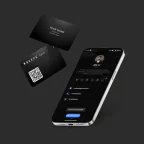
Card ₹1,699 once · profile from ₹199/year
Your logo printed free · usually arrives in 7-10 days
Read our Google reviewsAn NFC business card for a business owner is a printed card with a chip and a QR code that opens a live profile: what you sell, your prices, catalogue, WhatsApp, location and an enquiry form. You edit it any time without reprinting. The NFC card is ₹1,699 once, and the profile from ₹199 a year. Pro, at ₹299 a year, adds direct UPI payments.
What happens after someone taps your card
The card is the hand-over. The profile is the part they actually use. Four steps, and nobody installs anything.
You hand over the card
The same moment as a printed card. Give it to them, or hold it against their phone yourself.
They tap it, or scan the QR
An NFC phone opens it on contact. Everyone else scans the QR code printed on the back. No app on either side.
Your business profile opens
Your company, what you do, your photo, and the buttons you have switched on. It is a web page, so it just loads.
They do the next thing
Save your contact, message you on WhatsApp, look at products and prices, open your brochure, send an enquiry or book a slot.
Products, services, catalogue, gallery, enquiry form, booking, location and save-to-contacts are all on the Basic plan at ₹199/year. UPI payment, the Google review button and analytics are on Pro. More on how the chip itself works in our guide to NFC business cards.
When you are the owner, your card has a bigger job
An employee's card introduces a person inside a company the other side has usually already heard of. Your card does not get that shortcut. To the person holding it, you are the company.
So it has to answer a second set of questions. What does this business do. What does it sell. Is it a real, established thing. How do I deal with it. A printed rectangle answers the first set well. It has no room for the second.
- Name
- Job title
- Company name
- Phone number
- Email address
Five fields, and the company name is doing most of the work.
- Everything on the left
- What the business actually does
- Products and services, with prices
- Catalogue or company brochure
- Photo gallery of work, stock or premises
- WhatsApp, website and social profiles
- Your location on a map
- An enquiry form that captures the lead
- Appointment booking
- A Google review button (Pro)
- UPI payment collection (Pro)
- Whatever company details you choose to publish
Twelve, and no printed card holds them. A page does.
An employee's card says this is me. An owner's card has to say this is me, this is my business, and here is what you can do next. That is the whole difference, and everything below is a consequence of it.
Your card does not meet just one kind of person
Five people can take the same card in a single week, and none of them wants the same thing from it.
Customer
“What do you sell, what does it cost, and how do I reach you?”
Products and services with prices, a WhatsApp button, an enquiry form, booking.
Supplier or vendor
“Who am I dealing with, and where are you based?”
Your company description, your location on a map, and the contact routes you publish.
Partner or distributor
“What is the range, and who do I talk to about it?”
The full product list, your catalogue as a PDF, and a form that puts the enquiry in writing.
Candidate
“What does this company actually do, and is it going anywhere?”
The company description, your website, your social profiles and a gallery of the work.
Banker, landlord or professional contact
“Is this an established business or a man with a phone?”
The company details you choose to put on the page, your address, and your brochure.
One profile serves all five
You are not building five pages. You are building one, ordered so that whoever taps it most often gets what they need first, with everything else a scroll away.
Worth being precise: the profile does not change based on who is looking at it. A customer and a supplier see the same page. What you control is the order, and for most owners that means products and contact at the top, company detail underneath.
How this plays out in eight kinds of business
Same moment in each one: someone has just asked you for something a card cannot give them.
Retail or showroom owner
- Situation
- A walk-in likes something and asks what else you have in that range.
- With a printed card
- You hand over a card and promise to send photos later.
- With Beeps
- They tap. Your product list opens with photos and prices.
- What they do next
- They message you on WhatsApp about the exact item.
Restaurant owner
- Situation
- A regular asks for the menu and a number for bookings.
- With a printed card
- A card with a number, then the menu sent separately on WhatsApp.
- With Beeps
- They tap. The menu PDF, the location map and booking are on one page.
- What they do next
- They reserve a table without calling you.
Salon or spa owner
- Situation
- A client asks what a treatment costs and when you are free.
- With a printed card
- They call, you check the diary, you call back.
- With Beeps
- Services with prices are listed and the booking calendar is on the profile.
- What they do next
- They pick their own slot.
Clinic owner
- Situation
- A patient wants your timings and location after the consultation.
- With a printed card
- Timings printed once, and wrong the week you change them.
- With Beeps
- Timings sit in the profile text, the map opens in one tap, appointments are on the same page.
- What they do next
- They book the follow-up before they leave.
Agency owner
- Situation
- A prospect at an event asks to see your work.
- With a printed card
- "I will email the deck." Sometimes you remember to.
- With Beeps
- They tap. The gallery, the service list and the credentials PDF are already there.
- What they do next
- They send an enquiry while the conversation is still fresh.
Manufacturer
- Situation
- A buyer wants your catalogue and the specifications.
- With a printed card
- A PDF sent over WhatsApp, usually the next day.
- With Beeps
- The catalogue is attached to the profile and the product list carries the range.
- What they do next
- They enquire about a named line instead of asking you to "send details".
Trader or distributor
- Situation
- A retailer wants to know your range before they will talk terms.
- With a printed card
- A name and a number. Everything else happens on a call you have to schedule.
- With Beeps
- The product list, the brochure and an enquiry form all sit behind the tap.
- What they do next
- The first enquiry arrives with the item already named.
Real estate business owner
- Situation
- A buyer at a site visit asks what else you have.
- With a printed card
- You promise a WhatsApp with photos that evening.
- With Beeps
- The listing gallery and the brochure open while you are both standing there.
- What they do next
- They book a second viewing from the same page.
What belongs on a business owner's digital profile
Six blocks. Fill them in this order, because the first one decides whether anybody reads the rest.
About the business
- One line on what you do and for whom
- A longer description under it
- Your location on Google Maps
- Profile photo and cover image
What you sell
- Products with photos and prices
- Services with descriptions
- Price ranges where a fixed figure does not fit
The documents
- Catalogue or company brochure as a PDF
- Photo gallery of work, stock or premises
How to reach you
- Phone, email and WhatsApp buttons
- Social profiles
- An enquiry form that captures the lead even when nobody calls
What they can do next
- Save your contact in one tap
- Book an appointment
- Pay you by UPI (Pro)
- Leave a Google review (Pro)
What you are looking for
- Hiring, distributors, suppliers, partners
- Say it in the description, collect replies on the enquiry form
About company details
Your incorporation year, registration details and full trading address go in the description. They are the dullest thing you will write on the page and the thing a cautious buyer or a new supplier is quietly looking for. Be straight about what this does: publishing them gives a visitor more information to work with, it does not certify anything about your business. Leaving them off simply makes a stranger work harder to take you seriously. Ours are on our about page for the same reason.
Your printed card is static. Your business is not.
Six complaints we hear from owners almost every week, and what actually changes in each one.
“My card has my name and my number on it. That is all it has.”
The card stays a card. The page behind it carries what you sell, your prices, your brochure and a way to enquire.
Someone who took your card in March can still work out what you do in September, without ringing you to ask.
“I send the same brochure to everyone, one WhatsApp at a time.”
Attach the PDF to your profile once. Every hand-over from then on carries the current version.
You stop hunting for the file on your phone, and nobody ends up with a copy from two revisions ago.
“My number changed and I am sitting on 400 printed cards.”
Edit the number in your dashboard. The card already in someone’s drawer opens the updated page.
The physical card never has to be reprinted because the information behind it moved.
“Customers, suppliers and cold callers all reach my personal number.”
Publish an enquiry form and the business routes you want people to use, and keep your direct number for the people who genuinely need it.
You decide which route a stranger takes before you hand the card over, instead of after the Sunday calls start.
“People want prices before they will have a conversation.”
List products and services with prices, or with honest ranges where a fixed figure does not fit.
A visible figure does the qualifying for you. The people who then call have already accepted the number.
“I want Google reviews and I never remember to ask.”
A Google review button on the profile takes them straight to your review form. It is on the Pro plan.
The ask happens on their phone, at the moment they are pleased with you, without you having to say it out loud.
The card in their pocket never changes. What it opens does. New number, new prices, a new product line, a second location, a revised brochure - each one is an edit, and the next person to tap a card you handed out last year sees the current version. One honest limit: this updates the page, not the conversation. Someone who already screenshotted your old price list still has your old price list.
Also worth reading: putting WhatsApp behind the card and asking for Google reviews with a tap.
Traditional business card vs Beeps Card
Both rows at the top are things a printed card does perfectly well, including carrying a QR code. The difference is not the QR. It is whether the information behind it can change.
“Pro” marks a capability on the ₹299/year plan rather than Basic. The last row is the real trade: a printed card keeps working forever with no fee, and a live page does not. We set out what happens if you stop paying in plain terms here, and the full cost comparison lives in our paper vs digital guide.
NFC, QR and the digital profile: what each one actually is
Three different things, usually sold as if they were one. The distinction decides what you should buy.
Traditional paper business card
A printed card carrying fixed contact and business details. What is printed on it is what it says, permanently.
Digital business card
A web profile holding your contact and business information at a link you can edit at any time. No physical object is involved.
QR business card
A printed card with a QR code on it. Scanning the code with a phone camera opens a digital profile.
NFC business card
A printed card with an NFC chip inside it. Holding a compatible phone against the card opens a digital profile.
NFC digital business card
An NFC card wired to a live digital profile, so the tap lands on business information the owner controls and can change.
Hybrid business card
A printed card carrying both an NFC chip and a printed QR code, with both opening the same digital profile.
What Beeps Card is
Beeps Card is a physical NFC business card connected to a live digital business profile. The card is printed with your name and company and carries both an NFC chip and a QR code. The profile behind it presents your business information and the actions you want people to take: products and services with prices, a catalogue, a gallery, WhatsApp, your location, an enquiry form and appointment booking on Basic, with UPI payment collection, a Google review button and analytics on Pro.
It is sold and supported in India by Beeps Venture Technologies LLP, registered in Kochi, Kerala since 2024.
What NFC does not do
Worth saying plainly, because a lot of marketing does not. NFC opens the profile faster than typing a URL. That is the whole of its contribution. Everything useful that happens next - the product list, the enquiry, the booking, the review - comes from the profile, not from the chip. A card with a chip and nothing behind it is a slightly quicker way to share a phone number.
Both methods are on every card because you cannot choose which phone you are handed. Works on iPhone XS and later and most NFC Android phones, with a printed QR code as fallback. The practical differences are in our NFC vs QR comparison, and there is a QR-only option if you would rather print your own.
Owners who personally represent the business
Your business does not have to be large for this to be worth it. In most of these, the owner is the main point of contact, which is exactly why the card carries more weight.
Founder
You are the first impression of a company nobody has heard of yet. The profile does the introducing for you.
Small-business owner
You are the sales team, the support line and accounts. One card has to cover all three jobs.
Retail or showroom owner
Stock and prices move. A printed card cannot follow them. A product list can.
Restaurant owner
Menu, location and table bookings behind one tap, instead of three WhatsApps.
Salon or clinic owner
Services with prices and a booking calendar on the same page they got your number from.
Agency owner
A gallery and a credentials PDF do more at an event than a promise to email the deck.
Manufacturer
Your catalogue travels with the card instead of arriving the following afternoon.
Trader or distributor
The range and the enquiry form sit behind the tap, so first contact starts with a specific item.
Consultant
What you do, who you do it for, and a booking link. That is most of your first conversation.
Service business owner
Electricians, contractors, interior firms, repair businesses. A gallery of finished work is the pitch.
Real estate business owner
Listings, a brochure and a viewing booking, opened at the site rather than sent that night.
Family business owner
Decades of trading and a full address are worth publishing, and they change faster than a print run allows.
Delivery is free anywhere in India. The pages owners use most after this one:
Working alone rather than running a business? See Beeps for freelancers. Buying for a team? Cards for your staff and bulk orders are handled differently.
How much does a Beeps Card cost?
Two things, priced separately: a card you buy once, and a profile you keep for a year at a time.
Pro profile + the NFC card
Pro is the one owners usually want, because UPI collection and the Google review button are on it, along with analytics and the option to remove our branding so the page reads as your company.
Products, services, catalogue, gallery, enquiry form, booking, location, save-to-contacts.
Everything in Basic, plus UPI payments, Google review button, custom links, analytics, branding removed.
PVC, black or white, printed with your name. Free delivery across India.
The card is optional. The profile works from day one with a link and a QR code you can download and print on your existing cards, a standee or your packaging. Running 20 or more profiles for a team is the Enterprise plan at ₹5,000/year, which is also where the WhatsApp store sits. Everything is billed in rupees by an Indian LLP.
What business owners push back with
Six things owners say before buying, answered the way we would answer them across a desk.
“I already have printed business cards.”
Keep using them. Your profile has a QR code you can download and put on the next print run, on a standee or on your packaging, and you get the live page behind the card you already have. The NFC card is worth buying when you want the tap itself, or when the printed batch is due for reprinting anyway.
“I only want people to save my number.”
Then a printed card is probably enough, and there is no sense spending ₹1,699 to do a job a ₹3 card already does well. This is worth buying when you want what comes after the number: the products, the brochure, the enquiry, the booking.
“Why do I need NFC when a QR code already works?”
QR does already work, which is why every Beeps Card has one printed on it. NFC is faster in the moment - you hold the card against their phone instead of asking them to open a camera app and line up a square. Both open the same profile, so this is a convenience question, not a capability one.
“Why not just send people my website?”
A website is built for someone who arrives with a question already formed. A profile is built for the thirty seconds after a handshake: who you are, what you sell, and one thing to do next. If your website genuinely does that, send the website - and link it from the profile, because the person still has to save your number somewhere.
“Can I actually change the information later?”
Yes, and for most owners that is the main reason to buy. You edit the profile in your dashboard and the next person to open it sees the new version, including people holding cards you gave out last year. The card itself is never the thing that needs replacing.
“Is this worth it for a small business?”
It tends to be more useful at small scale, not less. In a small business the owner personally takes the enquiry, quotes the price and sends the catalogue. Those are exactly the three jobs the profile takes off your phone. A large company has a website, a sales team and a brand doing that work already.
When paper is still enough
Four cases where a printed card already does the whole job.
- You hand out several hundred cheap printed cards a year and name recognition is the whole job.
- There is nothing behind the card to link to: no products to list, no brochure, no booking, nothing online.
- You network rarely, and the few people who need your number get it over WhatsApp anyway.
- You want something you never have to think about again. This carries a yearly subscription. A printed card does not.
If one of those is you, a well-printed paper card covers it. The case for a live profile is strongest when you are the person people ask for prices, catalogues and availability, and you are tired of sending the same three things by hand.
Questions business owners ask
What is an NFC business card for business owners?
An NFC business card for a business owner is a printed card with an NFC chip inside, connected to a live digital profile that describes the business rather than only the person. Tapping it on a phone opens that profile, where a visitor can see what the company does, browse products and services with prices, open the brochure, message on WhatsApp, send an enquiry or book a slot.
How does a business owner's NFC card work?
You hand the card over as you would a printed one. The other person holds it against their phone, or scans the QR code printed on the card, and your business profile opens in their browser. Nobody installs anything. You edit the profile from your dashboard whenever the business changes, and the same card keeps opening the updated page.
What is a digital business card for a business owner?
It is a live web profile holding your contact details and your business information at one link. For an owner it usually carries more than contact details: what the company does, the products or services, prices, a catalogue, a location and a way to enquire. Because it is a page rather than print, you can change any of it without replacing anything physical.
What should a business owner's digital profile contain?
Six things, in this order: one line on what the business does, your products or services with prices, your catalogue or brochure as a PDF, the ways to reach you including WhatsApp and an enquiry form, the action you want people to take such as booking or paying, and what you are currently looking for - staff, distributors or suppliers. The last one is the cheapest business development on the page and almost nobody includes it.
Can a business owner add products to a digital business card?
Yes. Product listings are on the Basic plan at ₹199/year, with a photo, a description and a price on each item. For an owner this is usually the single most-used part of the profile, because the first question a new customer asks is what you sell.
Can I show services and prices?
Yes. Service listings are on Basic at ₹199/year and each one can carry a description and a price. Ranges work as well as fixed figures when the job varies, and a visible range still does the qualifying for you.
Can I add WhatsApp to my business card?
Yes. A WhatsApp button sits with your phone and email buttons on the profile from the Basic plan, so a customer can start a chat without saving your number first. If you want customers to pick items and send the order into your chat, that is the WhatsApp store, which is on the Enterprise plan at ₹5,000/year for 20 profiles.
Can I add my company brochure or catalogue?
Yes. A PDF catalogue or brochure can be attached to the profile on the Basic plan at ₹199/year, and you can swap the file whenever it is revised. The practical benefit is that every hand-over carries the current version instead of whatever is saved on your phone.
Can I add a Google review button?
Yes. The Google review button is on the Pro plan and sends someone straight to your review form, so the ask happens on their phone rather than out loud. It does not guarantee a review - it removes the steps between wanting to leave one and leaving one.
Can people save my contact in one tap?
Yes. One-tap save to contacts is on the Basic plan. The contact card that lands in their phone carries your details from the profile, so it stays consistent with whatever you have published.
Can customers book an appointment through the card?
Yes. Appointment booking is on the Basic plan at ₹199/year, which matters most for salons, clinics, consultants and anyone whose diary is the bottleneck. The visitor picks a slot on the profile instead of calling to ask what is free.
Can customers pay me through the card?
Yes, both ways, on the Pro plan at ₹299/year. Direct UPI lets someone pay you from the profile without you reading out a number, and it settles to your bank with nothing deducted. Payment gateway integration is on the same plan for cards and netbanking. For most owners taking advances or settling small bills, UPI is the one that gets used.
Can I update my information after buying the card?
Yes, as often as you like, at no extra cost. You edit the profile in your dashboard and the change is live on the next open. This is the part of the product that matters most to owners, because prices, product lines, addresses and phone numbers all change faster than a print run.
Do I need a new card when my details change?
No. The card points at your profile, and the profile is what changes. Cards you handed out two years ago open the current page. The one exception is the name printed on the card itself - that is ink, so if your name or company name changes you would want a new card.
What is the difference between an NFC business card and a QR business card?
They are two ways of opening the same thing. An NFC card opens the profile when a compatible phone is held against it. A QR card opens it when the code is scanned with a camera. NFC is quicker in person; QR works on any phone with a camera and is visible, so people know there is something to do. Every Beeps Card carries both.
Does the other person need an app?
No. The profile is an ordinary web page, so it opens in whatever browser their phone already has. Nothing is installed on their side and nothing is installed on yours beyond signing in to your dashboard.
Does NFC work on iPhone?
Yes, on iPhone XS and later, with no app and no setting to turn on. Older iPhones do not read NFC tags in the background, which is one of the reasons every card is printed with a QR code as well.
Does NFC work on Android?
On most Android phones that have NFC hardware, yes, provided NFC is switched on in settings. Budget models sometimes ship without the hardware at all. The printed QR code covers those phones.
Is an NFC business card useful for a small business?
Often more useful than for a large one. In a small business the owner personally answers the enquiry, quotes the price and sends the catalogue, so a profile that does those three things without you is doing real work. A large company already has a website and a sales team performing that role.
Can an NFC business card replace a traditional visiting card?
It replaces the printed card in your pocket, because a Beeps Card is itself a printed card with your name on it. What it does not replace is bulk print: if you are leaving 300 cards on a counter or in a hotel lobby, cheap paper is still the right tool. Plenty of owners carry both for exactly that reason.
Is this useful for a business owner who has employees?
Yes, and the two purchases are separate. Your own card is about representing the business. Staff cards are a brand-consistency and offboarding question, and that is what the Enterprise plan covers at ₹5,000/year for 20 profiles. Most owners start with one profile for themselves and add the team later.
What is the best business card for entrepreneurs in India?
For an Indian founder the useful test is whether the card handles how business is actually done here: WhatsApp as the default channel, UPI as the default payment, Google reviews as the default proof, and pricing in rupees. Beeps Card is built around those - profile from ₹199/year, card ₹1,699 once, billed by a registered Indian LLP.
What should a founder put on a digital business card?
Lead with what the company does, not your designation. "Founder & CEO" tells a stranger nothing about whether you can help them. One plain line on what you make or sell and for whom, then the products, then a way to enquire. Your title belongs underneath, where it adds context instead of standing in for it.
What happens if I stop paying the subscription?
The profile stops serving, which means the card stops opening anything useful. This is the honest cost of a live page and it is worth knowing before you buy rather than after. The card itself is a one-time purchase; the yearly fee is what keeps the page online and editable.
Still deciding on the category itself? Start with what a digital business card is, or how the Indian options compare.
A printed card tells people who you are.
Yours can tell them what the business does.
Same hand-over, same pocket. Behind the tap: what you sell, what it costs, your catalogue, your WhatsApp and a form that takes the enquiry. Pro plus the NFC card is ₹1,998 for the first year, then ₹299 a year.
Questions first? Ask us on WhatsApp - 24/7, usually an instant reply.